
Blog
The Six-Month Refrigeration Service List for Restaurants
Refrigeration averages 44% of a commercial kitchen's electricity. Here is the six-month service list ENERGY STAR published, and what it means for a Johnston County restaurant.
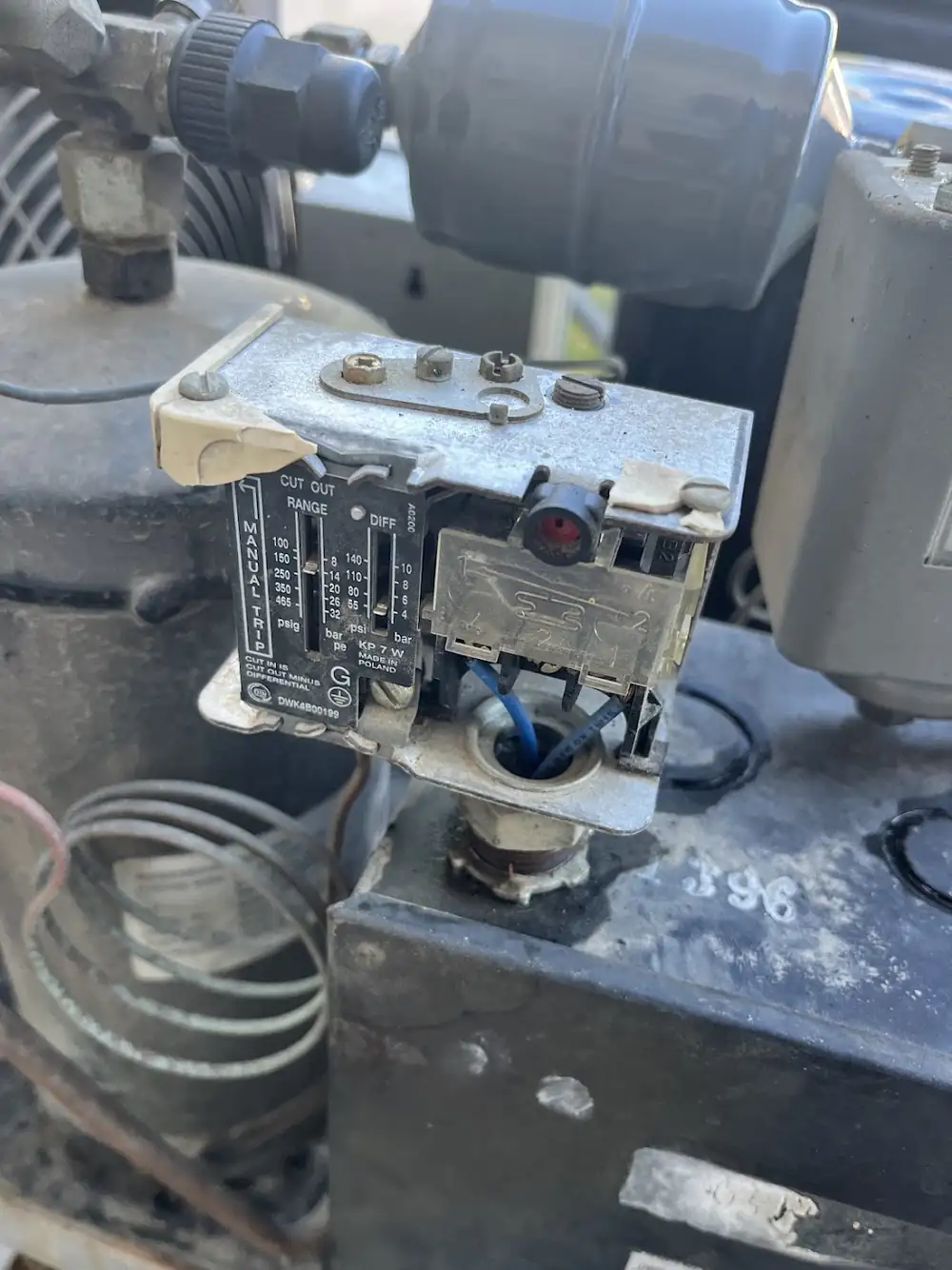
Quick answer: A restaurant’s refrigeration should get professional attention about every six months. The list ENERGY STAR published calls for six-month work on walk-in evaporators and condensers, reach-in coils and ice makers, with gaskets cleaned regularly by your own staff. If you run a kitchen in Johnston County, heat and grease can shorten that schedule. The payoff is real: basic coil cleaning cut energy use by an average of 17% in one 10-unit study.
Most restaurants only think about the walk-in when it stops working. The numbers below are a good reason to think about it twice a year instead.
Why does refrigeration deserve a schedule of its own?
According to U.S. Energy Information Administration data cited by ENERGY STAR, refrigeration uses more electricity than anything else in a commercial kitchen, at a national average of 44%. ENERGY STAR’s estimate for an average restaurant, roughly 3,500 square feet at 38 kWh per square foot and $0.10 per kWh, comes to about $5,800 a year to run refrigeration equipment.
ENERGY STAR’s restaurant guidance says the same thing a different way: restaurants generally use the most electricity for refrigeration, followed by lighting, then cooling. Your own bill will differ, but the order is hard to argue with.
How much can clean coils really save?
A condenser coil sheds heat. ENERGY STAR describes what happens when dust and dirt build up on it: the buildup acts as an insulator, and the compressor has to work longer and harder. In kitchens, that dirt often gets mixed with airborne grease.
In 2014 the San Francisco Department of the Environment commissioned a study at the Food Service Technology Center in San Ramon, California, and a sample of 10 units was measured before and after basic condenser coil cleaning. Energy use dropped by 2% on coils that were fairly clean to begin with and by 49% on one particularly dirty unit. The average across all 10 was 17%.
Take 17% off the $5,800 estimate and you get $986 a year. That is an estimate and not a promise, but it is a large number for something as simple as a clean coil.
What belongs on the six-month list?
ENERGY STAR published this list from Refrigerated Specialist Inc., a Texas company that maintains commercial refrigeration for hospitality and food service.
| Equipment | What gets done | How often |
|---|---|---|
| Walk-ins | Evaporators and condensers, electrical and mechanical testing, hardware adjustments, general tune-up | Six-month intervals |
| Reach-ins, under-counters, cold wells | Clean condenser and evaporator coils, blow out drains, tighten and adjust hardware, calibrate thermostats and timers | Every six months |
| Ice makers, bins, dispensers | Clean and sanitize, new water filters, production test, electrical and mechanical testing | Six-month intervals, more with heavy use |
| Frozen beverage systems | Clean and sanitize vats, barrels and faceplates per the manufacturer | Usually daily |
| Gaskets | Regular cleaning by the operator, no harsh chemicals | Ongoing housekeeping |
Does every kitchen run on the same schedule?
No. The list says harder use and hotter, greasier kitchens may require more frequent cleaning. Ice makers that deal with aggressive mold or scale, poor water quality or high running hours may need it more often too. A busy fryer kitchen in Smithfield is not the same as a small cafe with a light menu, so ask how the schedule should change for the way you cook and the hours you run.
The list also makes a point worth repeating: in challenging environments such as high volume, high heat, high dust or grease, a professional preventive service can make a big difference over doing it yourself.
What should your own staff handle?
Gaskets are the clearest example. Food debris and beverage spills cause mold, which leads to sticking gaskets, tears and early failure. Harsh chemicals such as improperly diluted bleach will clean a gasket and also shorten its life, so handle them gently.
ENERGY STAR’s restaurant guidance adds the rest of the daily habit: leaky walk-in gaskets and freezer doors that do not shut are energy leaks that add up every month. If someone on staff notices, write it down and get it fixed. Our notes on restaurant HVAC upkeep between service calls cover the same habits for your air conditioning.
What upgrades are worth asking about on a service visit?
ENERGY STAR lists components that can improve efficiency on existing equipment, including door gaskets, suction pipe insulation, door frame heater controls and refrigerated case light sensors. Many of these are eligible for rebates, so check with your local utility first.
If a piece of equipment has reached the end of its road, read what an ENERGY STAR replacement actually saves before you decide.
What happens if you skip it?
Dirty coils and worn gaskets do not usually shut a box down right away. They make it fall behind, slowly, until a hot week finds the weak spot. That is how a maintenance item turns into a walk-in running warm and a call about food safety.
Why use Page Heating and Air for restaurant refrigeration maintenance?
Our Basic, Professional and Business plans include coil cleaning and a full system check twice a year, which lines up with the six-month rhythm above. Page Heating and Air works on walk-in coolers and freezers and the HVAC in the same building, from Clayton across Johnston County, including Four Oaks and Selma. If your list includes other equipment, ask us what we can cover.
Want a plan quote? Call (919) 809-0599 and tell us what you run.
Sources
FAQ
Common Questions
Still have questions? Call (919) 809-0599 and ask.
How often should restaurant refrigeration be serviced?
The list ENERGY STAR published calls for six-month intervals on walk-in evaporators and condensers, reach-in and under-counter coils, and ice makers. Hotter or greasier kitchens, and high running hours, may need it more often.
How much does cleaning condenser coils save?
In a 10-unit study ENERGY STAR cites, basic coil cleaning cut energy use by 2% on fairly clean coils and by 49% on one especially dirty unit, averaging 17%. Applied to ENERGY STAR's $5,800 refrigeration estimate for an average restaurant, that is $986 a year.
What can my own staff handle between service visits?
Gaskets are a housekeeping item, cleaned regularly by the operator with gentle products, since harsh chemicals shorten gasket life. Frozen beverage systems usually need cleaning daily, following the manufacturer's directions. Coils and electrical and mechanical testing are better left to a service visit.
More articles
-
Refrigerant Leaks on Commercial Refrigeration: What the EPA Rule Says
The EPA's leak repair rule covers appliances with 50 or more pounds of ozone-depleting refrigerant. Here is the 20% trigger, the 30-day clock and what a restaurant owner should know.
Read more -
Repair or Replace That Reach-In? What an ENERGY STAR Model Saves
ENERGY STAR commercial refrigerators and freezers are 20% more efficient on average, but the savings range from $10 to over $110 a year. Here is how to weigh repair against replacement.
Read more -
Replacing Restaurant Refrigeration: The New Refrigerant Limits by Equipment Type
Stand-alone units, remote condensing units and light commercial AC each have their own EPA refrigerant limit. Here is the table, what it means for a Johnston County restaurant, and what stays repairable.
Read more
Get In Touch
Ready to Get Started?
If this sounds like your situation, we can help.