
Blog
Repair or Replace That Reach-In? What an ENERGY STAR Model Saves
ENERGY STAR commercial refrigerators and freezers are 20% more efficient on average, but the savings range from $10 to over $110 a year. Here is how to weigh repair against replacement.
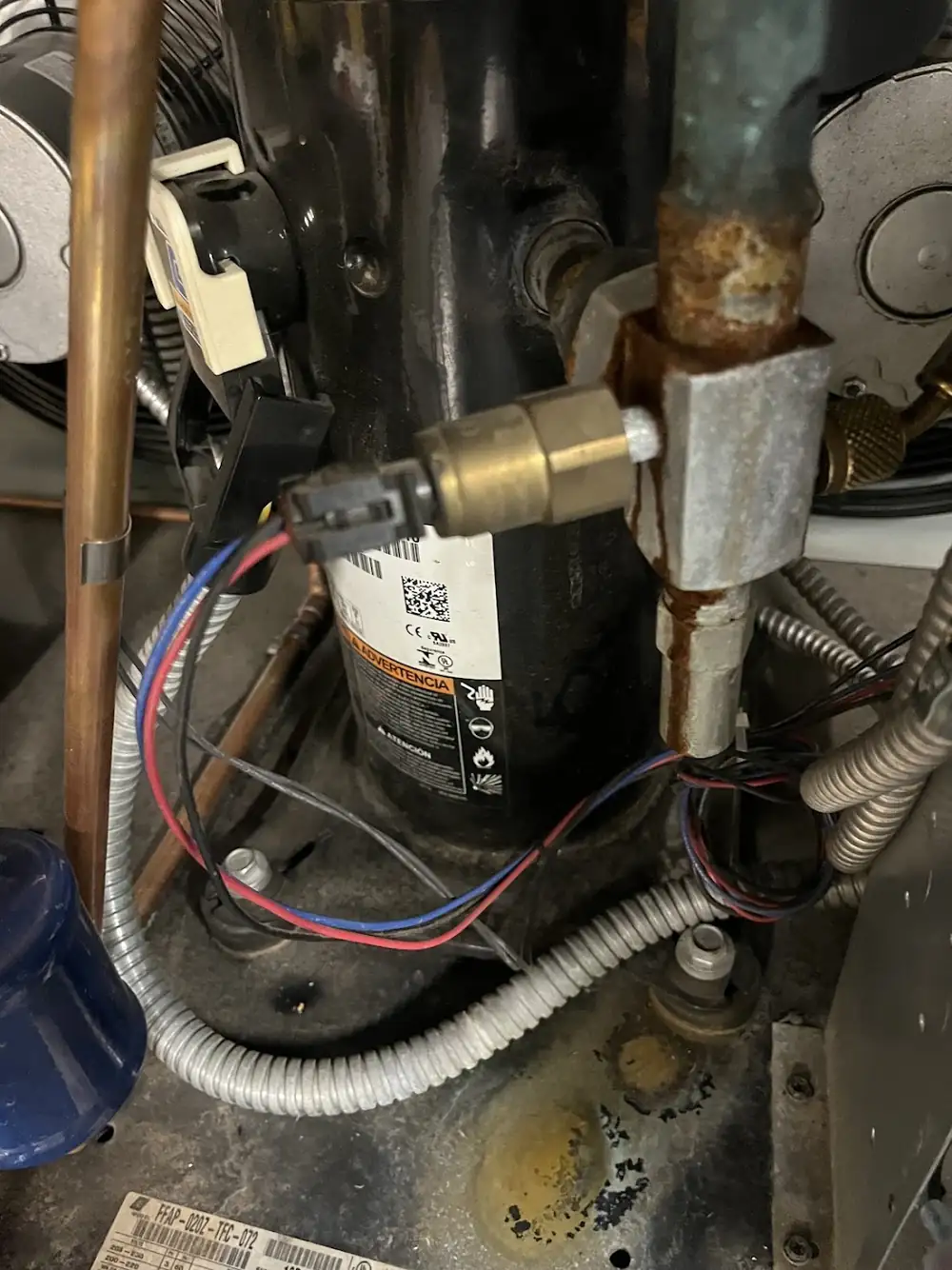
Quick answer: Energy savings alone rarely decide this. ENERGY STAR commercial refrigerators and freezers are on average 20% more efficient than standard models, but the dollars vary from more than $10 a year on a solid door freezer to more than $110 a year on a glass door freezer. For a restaurant in Clayton or Johnston County, price the repair, check the coils and the equipment’s history, and treat the energy savings as a tiebreaker unless the unit is a glass door freezer.
A reach-in fails, someone gives you a repair price and someone else tells you to buy new. Here is what the official numbers say.
How much does an ENERGY STAR commercial refrigerator or freezer save?
ENERGY STAR lists these savings for certified models:
| Certified model | Energy saved per year | Dollars saved per year | Lifetime utility savings |
|---|---|---|---|
| Solid door refrigerator | 325 kWh | More than $40 | $350 |
| Glass door refrigerator | 370 kWh | Nearly $50 | $430 |
| Solid door freezer | 80 kWh | More than $10 | $80 |
| Glass door freezer | 900 kWh | More than $110 | $980 |
Those numbers put a limit on the argument. If replacing a solid door freezer saves about $80 over its lifetime on utilities, that alone does not pay for a new box. A glass door freezer is a different conversation, at $980.
Where do those savings come from?
ENERGY STAR credits design components such as ECM evaporator and condenser fan motors, hot gas anti-sweat heaters and high-efficiency compressors. They add up when a unit is working in a hot kitchen with the door opening all day, which is the condition these models are designed and tested for.
What should you try before replacing anything?
Clean the coils. ENERGY STAR cites a 10-unit study in which basic condenser coil cleaning cut energy use by an average of 17%, from 2% on fairly clean coils to 49% on one especially dirty unit. Its estimate for a whole average restaurant’s refrigeration comes to $986 a year.
That is a kitchen-wide figure and the table above is per unit, so they are not direct competitors. Still, it shows where the cheap savings are. A box with a dirty coil can look like a box that needs replacing. See the six-month service list for what regular service covers.
When does a repair usually make more sense?
- The failure is a single, identifiable part and the rest of the unit has been reliable.
- It is a solid door unit, where the energy savings from new are small.
- The coils have not been cleaned and the gaskets are worn, so the unit has not had a fair chance.
- The unit still has the capacity your kitchen needs.
When does replacing make more sense?
- Repairs keep stacking up on the same box, or it keeps needing refrigerant.
- It is a glass door freezer, where ENERGY STAR’s savings are largest.
- The unit no longer keeps up. The FDA Food Code’s model, in section 4-301.11, says equipment must be sufficient in number and capacity to provide the required food temperatures. If your menu has outgrown a box, a walk-in running warm may be a sizing problem instead of a repair problem.
- A rebate changes the math. ENERGY STAR points owners to its Rebate Finder, and many utilities offer rebates on certified equipment.
ENERGY STAR’s restaurant guidance frames the decision well: think in terms of life-cycle costs, including purchase price, annual energy costs and other long-term costs. High-efficiency appliances could cost more up front, and lower utility bills can make up the difference.
Do refrigerant rules change the answer?
They can. EPA’s table lists a global warming potential limit of 150 for stand-alone retail food refrigeration units from January 1, 2025, while parts used to repair existing systems are not restricted. Read the new refrigerant limits by equipment type and ask what refrigerant a new model uses. ENERGY STAR suggests considering lower-GWP options, including R-600a, R-290, R-450A, R-513A and R-744.
What does the ENERGY STAR label not cover?
ENERGY STAR’s eligible products are solid, transparent and mixed door refrigerators and freezers. Its ineligible list includes chef bases and griddle stands, prep tables, service over counter units, open air units, convertible temperature units, laboratory-grade equipment and remote condensing equipment. So a walk-in on a remote condenser is not part of this comparison.
How should you get a straight answer?
Get the repair price in writing and ask what caused the failure. Ask how old the unit is and how much life is likely left. Then compare the repair against the cost of a new unit, less any rebate, and use the table above for the energy difference. If the person quoting has a reason to sell you one answer, ask them to walk you through the numbers.
The lifetime column is useful here. It tells you roughly the most the utility bill will give back on that type of unit. Take the new unit’s installed price, subtract the rebate and the lifetime savings, and compare what is left with the repair. Your own electric rate and hours will move the number, but it keeps the conversation honest.
Why ask Page Heating and Air about bigger refrigeration decisions?
Page Heating and Air works on walk-in coolers and freezers and heating and air conditioning from Clayton out through towns like Pine Level, and our diagnostics and tune-ups start with finding out exactly what is going on. The business runs on being straight with customers, with no unnecessary upsells.
Weighing a bigger decision on your refrigeration? Call (919) 809-0599 or contact us and tell us what you run.
Sources
FAQ
Common Questions
Still have questions? Call (919) 809-0599 and ask.
How much more efficient is an ENERGY STAR commercial refrigerator?
ENERGY STAR says certified commercial refrigerators and freezers are on average 20 percent more energy efficient than standard models, thanks to components such as ECM fan motors, hot gas anti-sweat heaters or high-efficiency compressors.
Which type saves the most?
Glass door freezers, by a wide margin. ENERGY STAR lists 900 kWh and more than $110 a year, and $980 over the product's lifetime. Solid door freezers save 80 kWh and more than $10 a year.
Are walk-ins and prep tables covered by this label?
No. ENERGY STAR lists prep tables, chef bases, open air units and remote condensing equipment, among others, as ineligible for this commercial refrigerator and freezer category.
More articles
-
Refrigerant Leaks on Commercial Refrigeration: What the EPA Rule Says
The EPA's leak repair rule covers appliances with 50 or more pounds of ozone-depleting refrigerant. Here is the 20% trigger, the 30-day clock and what a restaurant owner should know.
Read more -
Replacing Restaurant Refrigeration: The New Refrigerant Limits by Equipment Type
Stand-alone units, remote condensing units and light commercial AC each have their own EPA refrigerant limit. Here is the table, what it means for a Johnston County restaurant, and what stays repairable.
Read more -
Restaurant HVAC Upkeep Between Service Calls
Check filters monthly, tune up once a year and check thermostats regularly. Here is ENERGY STAR's upkeep guidance for restaurants, with what your staff can handle around Johnston County.
Read more
Get In Touch
Ready to Get Started?
If this sounds like your situation, we can help.