Blog
Restaurant HVAC Upkeep Between Service Calls
Check filters monthly, tune up once a year and check thermostats regularly. Here is ENERGY STAR's upkeep guidance for restaurants, with what your staff can handle around Johnston County.
Quick answer: Restaurant HVAC upkeep between service calls comes down to a short list. ENERGY STAR says to check filters every month and change them at least every 3 months, get a yearly tune-up, keep thermostats checked and calibrated, and fix leaky walk-in gaskets and doors that do not shut. If you run a kitchen in Johnston County, a hot summer will find whatever you skipped. Most of this your staff can handle in a few minutes.
Nobody opens a restaurant to think about air filters. But a small routine costs very little, and the alternative is finding out on a full Saturday.
Why does a restaurant’s HVAC need more attention than an office’s?
ENERGY STAR says restaurants use about five to seven times more energy per square foot than other commercial buildings, and high-volume quick-service restaurants may use up to 10 times more. They generally use the most electricity for refrigeration, followed by lighting, then cooling.
A kitchen also gives the air conditioner more work. Cooking adds heat and grease to the building, and the doors open all day. That makes the simple upkeep below worth doing on a schedule rather than when someone remembers.
How often should you check the filters?
Check the filter every month, especially during heavy use in winter and summer. If it looks dirty after a month, change it. At a minimum, change it every 3 months. ENERGY STAR’s reason is straightforward: a dirty filter slows down air flow and makes the system work harder to keep you warm or cool, which wastes energy.
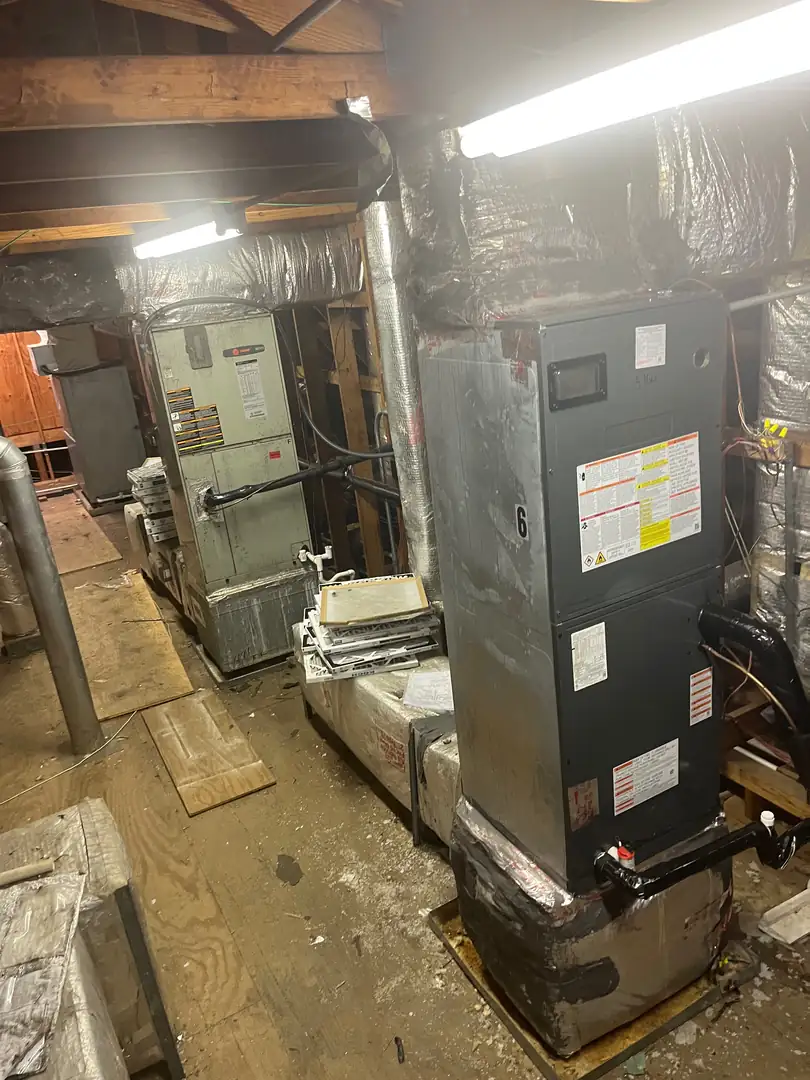
Put the filter size on the unit with a marker and keep spares on a shelf nearby, like the stack in the photo above. Then the job takes minutes and anyone on staff can do it.
What does a yearly tune-up do?
ENERGY STAR compares it to a tune-up for your car improving gas mileage: a yearly tune-up of your heating and cooling system can improve efficiency and comfort. It is also the visit where someone looks at the things your staff cannot, like coils, motors and electrical connections.
Our Basic, Professional and Business plans go further than the yearly minimum, with coil cleaning and a full system check twice a year. If something already seems off, a diagnostic and tune-up is the place to start.
Why do thermostats matter so much?
ENERGY STAR notes that kitchen equipment performance changes over time, and that thermostats and control systems can fail, fall out of calibration or get readjusted. Its advice is to do a regular thermostat check on your appliances, refrigeration, dish machines and hot water heaters and reset them to the correct operating temperature.
For the building itself, a programmable thermostat fits spaces that sit unoccupied during set periods of the week. A dining room that closes at a set time every night is a good example.
What should you check on the walk-in?
The same routine should reach the walk-in. ENERGY STAR calls out leaky walk-in gaskets and freezer doors that do not shut as energy leaks that add up month after month. Gaskets are a housekeeping item for your own staff: clean them regularly, handle them gently, and skip harsh chemicals such as improperly diluted bleach, which can shorten their life.
Thermometers belong on this list too. If the reading climbs, the 41°F line in the FDA Food Code is the number to watch. The coils and the rest of the box are covered on the six-month service list.
What about the kitchen hood?
Kitchen ventilation is not covered by the ENERGY STAR program, but its restaurant guidance still has useful suggestions. You can cut down on heat and smoke spillage by adding inexpensive side panels to hoods and by turning off an exhaust hood when appliances are not in use. A demand-based exhaust control system uses sensors to monitor cooking and varies the fan speed to match.
What goes on the upkeep calendar?
| Task | How often | Who |
|---|---|---|
| Check HVAC air filter | Monthly | Your staff |
| Change HVAC air filter | When dirty, at least every 3 months | Your staff |
| Clean walk-in door gaskets | Regularly, gently | Your staff |
| Check door closes and seals | Regularly | Your staff |
| Check thermostats and calibration | Regularly | Staff, or service visit |
| Heating and cooling tune-up | Yearly | Service visit |
| Walk-in evaporators and condensers | Every six months | Service visit |
Who should own the list?
Pick one person, usually a manager who opens or closes, and put these tasks on the same calendar as your other opening duties. Write the date on each new filter. Keep a simple log of what was checked and anything that looked wrong. When a service call does happen, that log tells whoever shows up what changed and when, which saves time on the visit.
When should you stop and call?
Upkeep has limits. Call for service if the dining room will not reach temperature, if a unit runs constantly, if you see ice on a coil or lines, or if a breaker keeps tripping. Do not keep resetting it. Our heating and AC repair work covers compressors, coils, motors and recharges on all makes and models.
Why use Page Heating and Air for restaurant HVAC upkeep?
Page Heating and Air has served Clayton and the surrounding area since 2006, including smaller Johnston County towns like Wilsons Mills and Kenly. You get one call for the HVAC and the walk-in, with after-hours emergency service available when it cannot wait.
Want it on the calendar? Call (919) 809-0599 and ask about a maintenance plan.
Sources
FAQ
Common Questions
Still have questions? Call (919) 809-0599 and ask.
How often should a restaurant change HVAC filters?
ENERGY STAR says to check the filter every month, especially during heavy use in winter and summer. If it looks dirty after a month, change it. At a minimum, change it every 3 months.
How often should restaurant HVAC be tuned up?
ENERGY STAR recommends a yearly tune-up of heating and cooling equipment, comparing it to a tune-up on a car improving gas mileage. A maintenance plan can put that on the calendar for you.
Does restaurant kitchen ventilation count as HVAC upkeep?
Kitchen ventilation is not covered by the ENERGY STAR program, but its restaurant guidance still suggests side panels on hoods, turning off exhaust hoods when appliances are not in use, and looking at demand-based exhaust controls.
More articles
-
Refrigerant Leaks on Commercial Refrigeration: What the EPA Rule Says
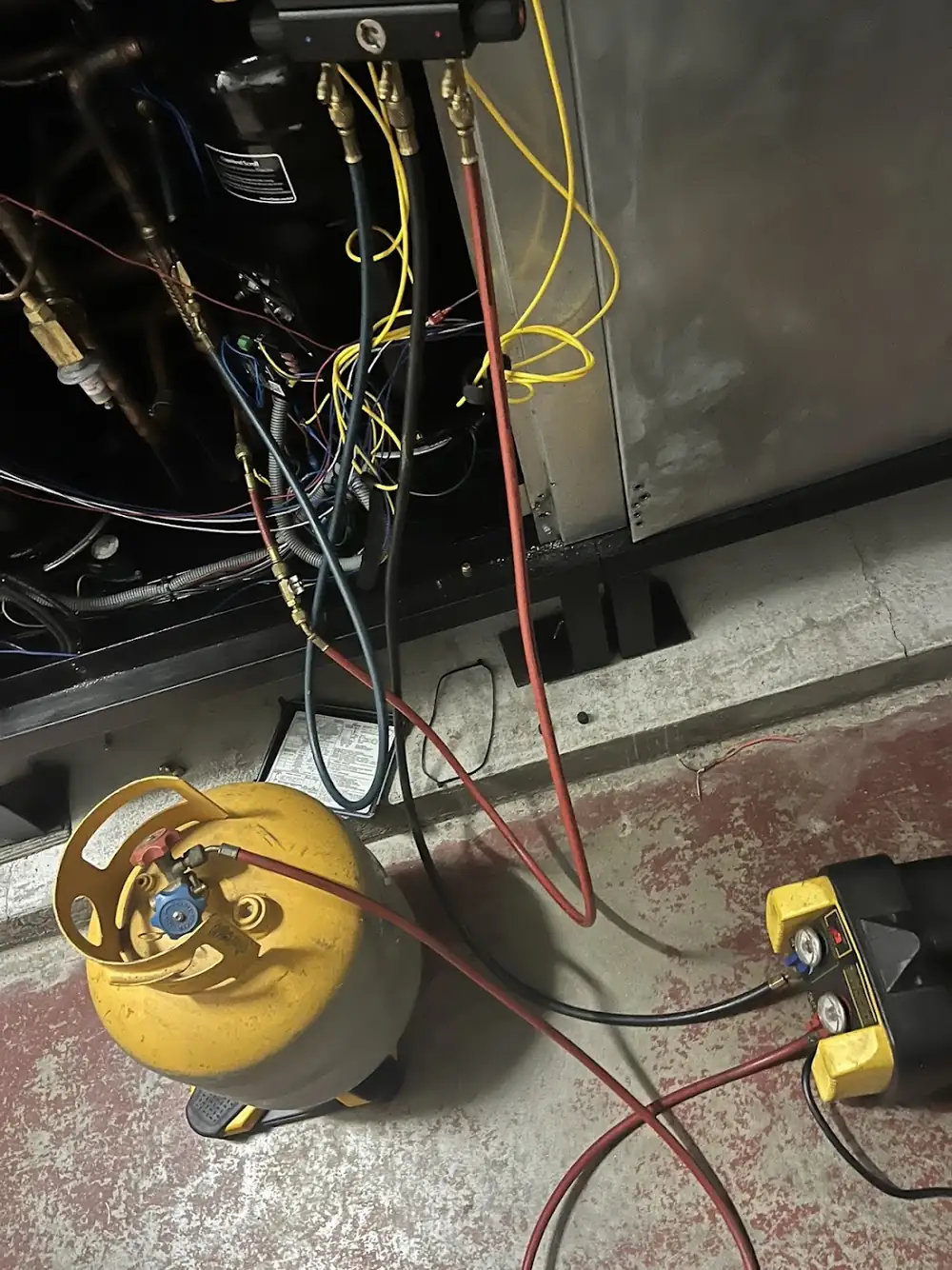
The EPA's leak repair rule covers appliances with 50 or more pounds of ozone-depleting refrigerant. Here is the 20% trigger, the 30-day clock and what a restaurant owner should know.
Read more -
Repair or Replace That Reach-In? What an ENERGY STAR Model Saves
ENERGY STAR commercial refrigerators and freezers are 20% more efficient on average, but the savings range from $10 to over $110 a year. Here is how to weigh repair against replacement.
Read more -
Replacing Restaurant Refrigeration: The New Refrigerant Limits by Equipment Type
Stand-alone units, remote condensing units and light commercial AC each have their own EPA refrigerant limit. Here is the table, what it means for a Johnston County restaurant, and what stays repairable.
Read more
Get In Touch
Ready to Get Started?
If this sounds like your situation, we can help.