
Blog
Walk-In Cooler Running Warm? The 41°F Line in the FDA Food Code
The FDA Food Code sets 41°F or less for cold holding. Here is what that means when a walk-in cooler in Clayton or Johnston County starts running warm.
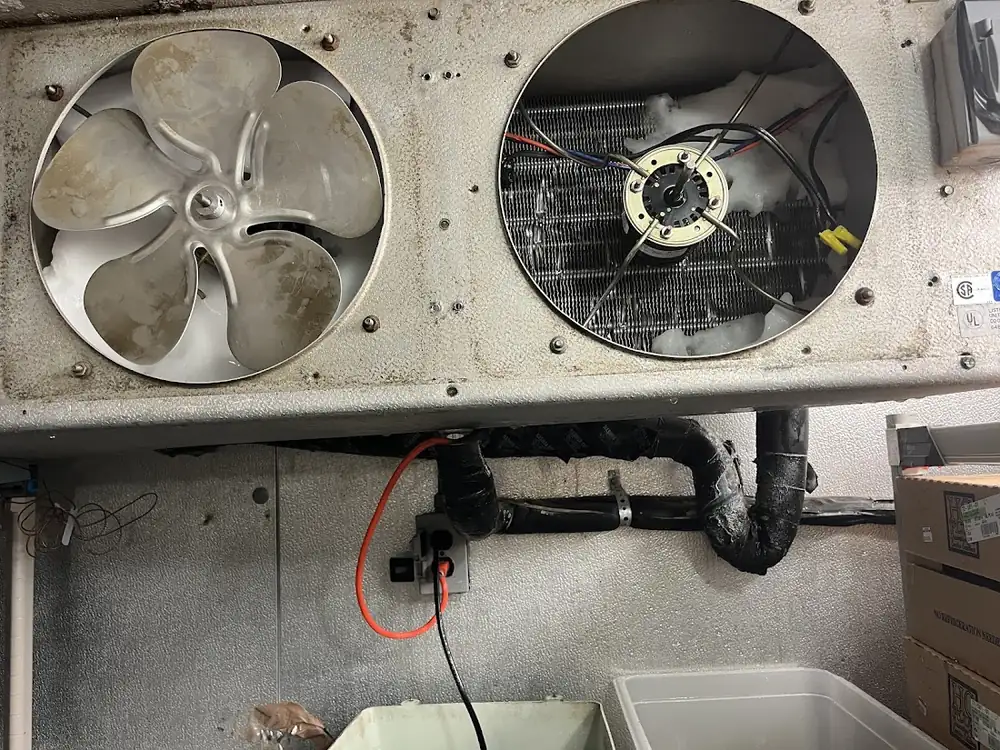
Quick answer: When a walk-in cooler runs warm, the number that matters is 41°F. The FDA Food Code says time/temperature control for safety (TCS) food held cold must stay at 41°F (5°C) or less. If you run a restaurant in Clayton or anywhere in Johnston County and the display is climbing, check the food itself, keep the door shut and write down the readings, then call someone who can find out why the box cannot keep up.
A cooler that drifts up on a Saturday night is a food problem first and an equipment problem second. Here is what FDA’s model code says, in plain terms, and what usually sits behind a warm box.
What is the FDA Food Code?
FDA describes the Food Code as a model for safeguarding public health, offered for adoption by local, state and federal jurisdictions. It is not a federal law on its own. The rules your own inspector works from come from your jurisdiction, so treat the numbers below as FDA’s model and ask your inspector which edition applies. We are quoting the 2022 edition, the 10th.
What does “41°F or less” actually mean?
Section 3-501.16 says TCS food must be held at 135°F or above when hot, or at 41°F or less when cold. The exceptions are during preparation, cooking or cooling, or when time is used as the public health control instead of temperature.
Notice the wording: the rule is about the food. A display reading 38°F does not settle anything if the product on the top shelf by the door is warmer than that. That is why the Food Code also cares where the thermometer is.
Where does the thermometer belong?
Under section 4-204.112, the sensor in a mechanically refrigerated unit should measure the air temperature, or a simulated product temperature, in the warmest part of the unit. FDA’s reasoning is simple. A device in the coldest spot may not represent the rest of the box, and food could be sitting in areas that are over the line.
Cold holding equipment for TCS food also needs at least one built-in or permanently attached thermometer placed so the display is easy to see. Ambient air thermometers scaled only in Fahrenheit must be accurate to plus or minus 3°F under section 4-203.12.
How fast does cooked food have to cool?
Section 3-501.14 sets two steps for cooked TCS food: from 135°F to 70°F within 2 hours, and from 135°F to 41°F or less within 6 hours total. Food prepared from ingredients at room temperature, such as canned tuna, has to reach 41°F within 4 hours.
This is where a walk-in’s capacity shows up. A full stockpot going in at closing is a heavy load for a system that is already working hard. Section 3-501.15 lists the accepted methods, including shallow pans, thinner portions, an ice water bath and rapid cooling equipment.
How long can prepped food stay in the walk-in?
Ready-to-eat TCS food prepared in-house and held for more than 24 hours must be date marked under section 3-501.17. At 41°F or less the limit is 7 days, and the day of preparation counts as Day 1. That clock assumes the box actually held 41°F the whole time.
What are the key numbers?
| What | FDA Food Code 2022 model | Section |
|---|---|---|
| Cold holding of TCS food | 41°F (5°C) or less | 3-501.16(A)(2) |
| Eggs not treated for Salmonella | Equipment ambient air 45°F (7°C) or less | 3-501.16(B) |
| Cooling cooked TCS food | 135°F to 70°F in 2 hours, to 41°F in 6 hours total | 3-501.14(A) |
| Cooling from room-temperature ingredients | To 41°F within 4 hours | 3-501.14(B) |
| Date marking food prepared in-house | Up to 7 days at 41°F or less, prep day is Day 1 | 3-501.17(A) |
| Thermometer location | Warmest part of the refrigerated unit | 4-204.112(A) |
| Equipment capacity | Enough in number and capacity to provide the required temperatures | 4-301.11 |
Why does a walk-in start running warm?
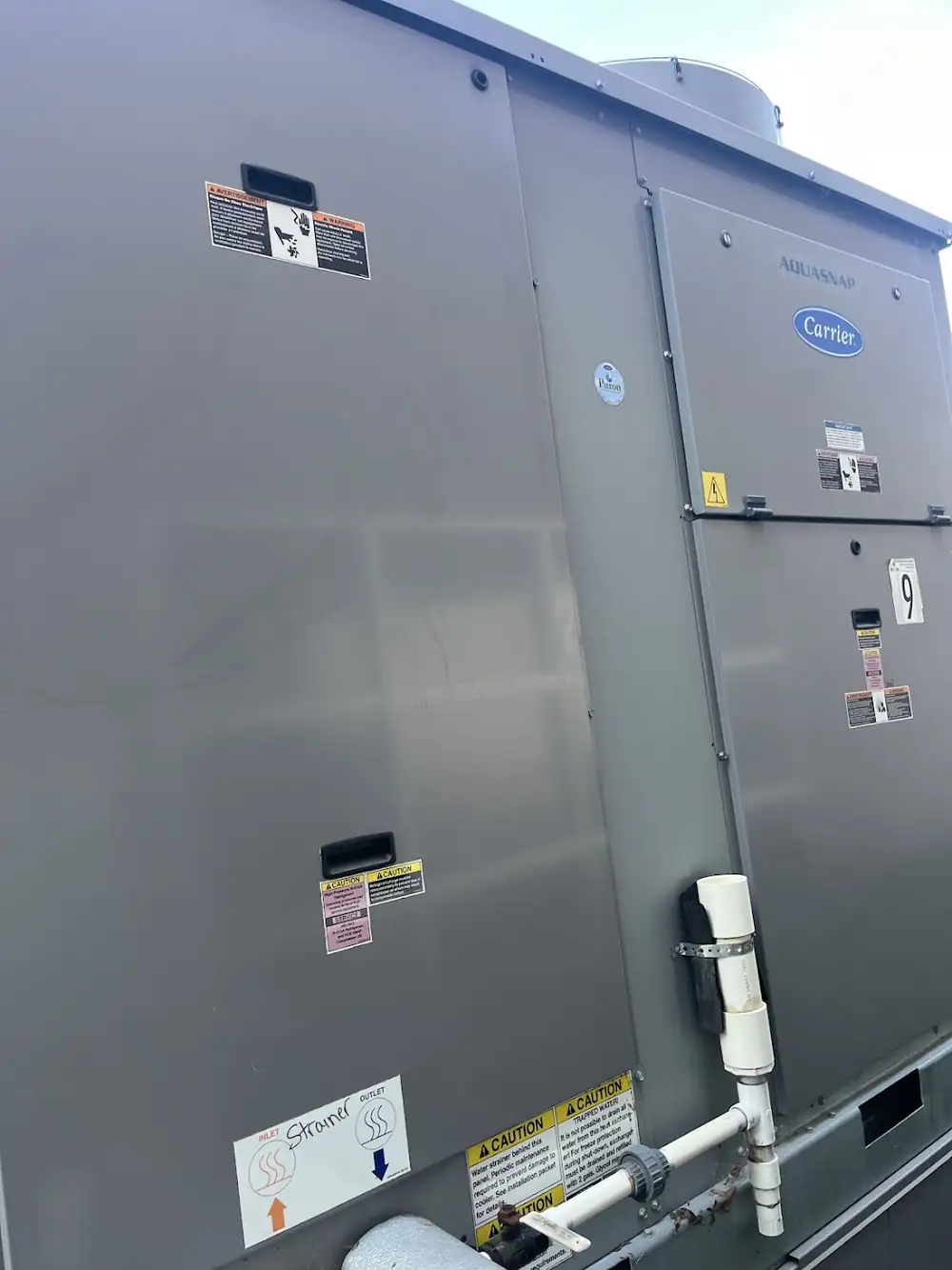
Usually it is not one dramatic failure. ENERGY STAR explains that dust and dirt on a condenser coil act as an insulator, which makes the compressor work longer and harder. It also calls out leaky walk-in gaskets and freezer doors that do not shut. Add an evaporator iced over so air cannot move through it, like the one in the photo above, a fan motor on its way out or a slow refrigerant leak, and the box falls behind.
Sometimes the box is simply too small for the kitchen now. Section 4-301.11 says equipment must be sufficient in number and capacity to provide the required food temperatures. If the menu has grown, the fix may be more capacity rather than another repair.
If you keep adding refrigerant to the same system, read what the EPA says about refrigerant leaks. If the coils have not been touched in a year, start with the six-month service list for restaurants.
What should you do when the box starts running warm?
- Read the thermometer in the warmest part of the box, then check the temperature of the food with a probe thermometer.
- Keep the door closed as much as you can.
- Write down the time and each reading. Your food safety decisions will depend on them.
- Move TCS food to a unit that is holding temperature, if you have one.
- Call for service, and use your food safety plan and your inspector’s guidance to decide what happens to food that was over the line.
Why call Page Heating and Air about a warm walk-in in Clayton?
Page Heating and Air has served Clayton and the surrounding area since 2006, and we work on walk-in coolers and freezers on all makes and models, including in Smithfield and across Johnston County. After-hours emergency service is available when a box goes down after close, and a maintenance plan puts coil cleaning and a full system check on the calendar twice a year.
Walk-in running warm? Call (919) 809-0599 or contact us and tell us what the box is doing.
Sources
FAQ
Common Questions
Still have questions? Call (919) 809-0599 and ask.
What temperature does the FDA Food Code set for a walk-in cooler?
The code is written for the food, not the box. Under section 3-501.16(A)(2), time/temperature control for safety food held cold must be kept at 41°F (5°C) or less. A walk-in has to keep that food at or below the line all day, including through deliveries and the rush.
Where should the thermometer go in a walk-in?
Section 4-204.112 says the sensor should measure the air temperature, or a simulated product temperature, in the warmest part of a mechanically refrigerated unit. Cold holding equipment also needs at least one built-in or permanently attached thermometer placed so the display is easy to read.
Is the FDA Food Code the law where my restaurant is?
The Food Code is a model that FDA offers for adoption by local, state and federal jurisdictions, so it is not a law on its own. This article covers FDA's model. Ask your local health inspector which rules and which edition apply to your restaurant.
More articles
-
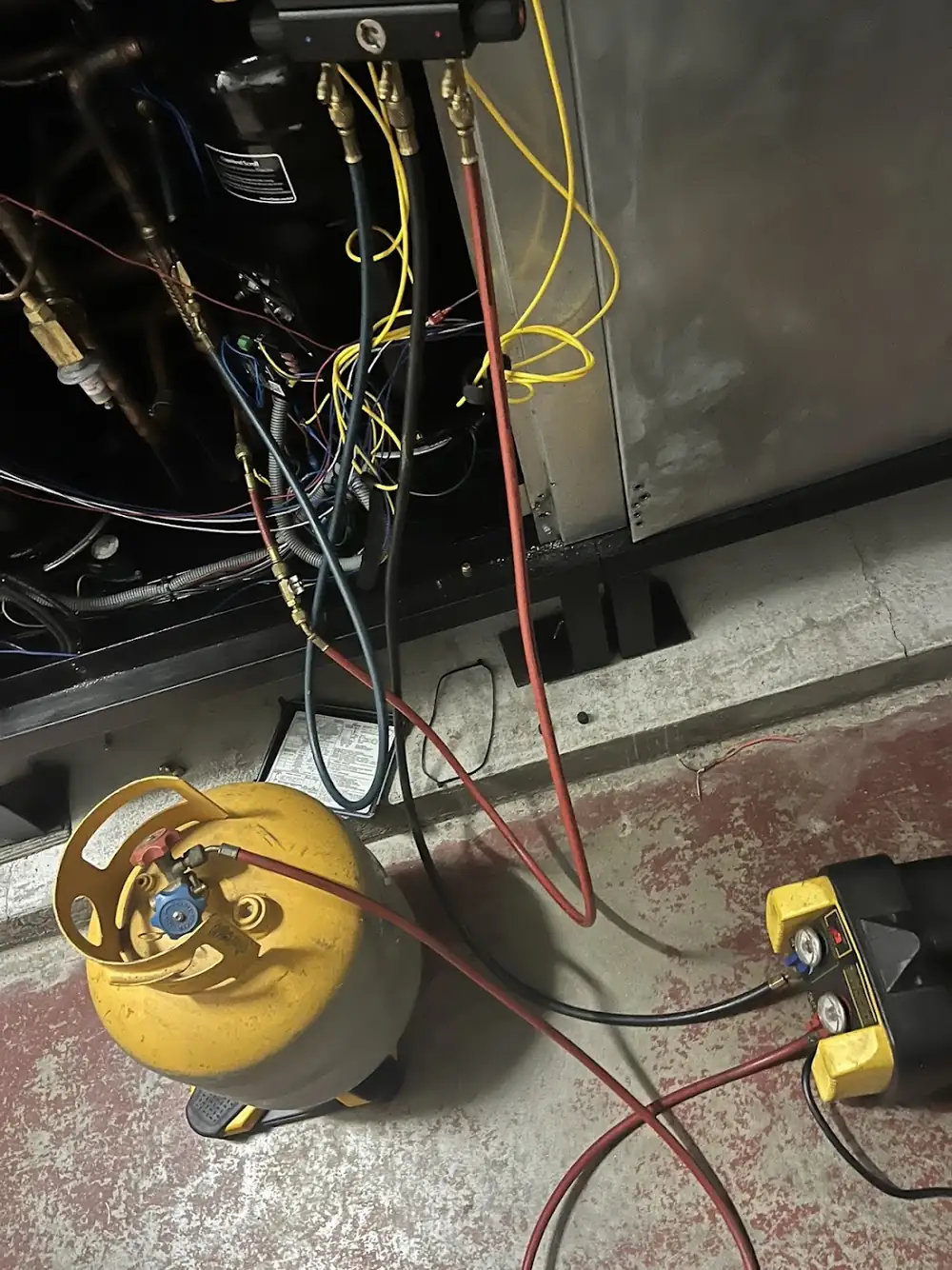
Refrigerant Leaks on Commercial Refrigeration: What the EPA Rule Says
The EPA's leak repair rule covers appliances with 50 or more pounds of ozone-depleting refrigerant. Here is the 20% trigger, the 30-day clock and what a restaurant owner should know.
Read more -
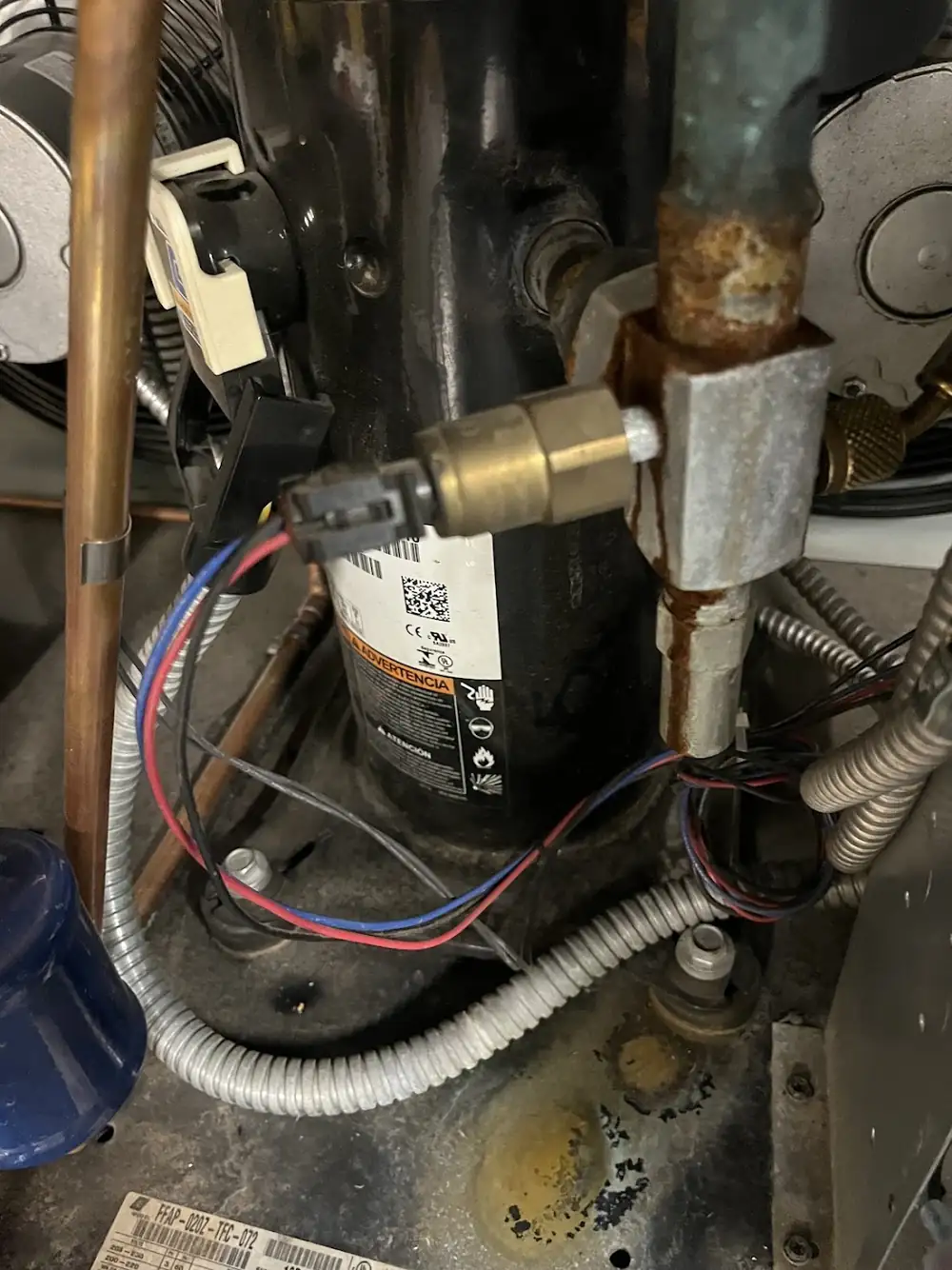
Repair or Replace That Reach-In? What an ENERGY STAR Model Saves
ENERGY STAR commercial refrigerators and freezers are 20% more efficient on average, but the savings range from $10 to over $110 a year. Here is how to weigh repair against replacement.
Read more -
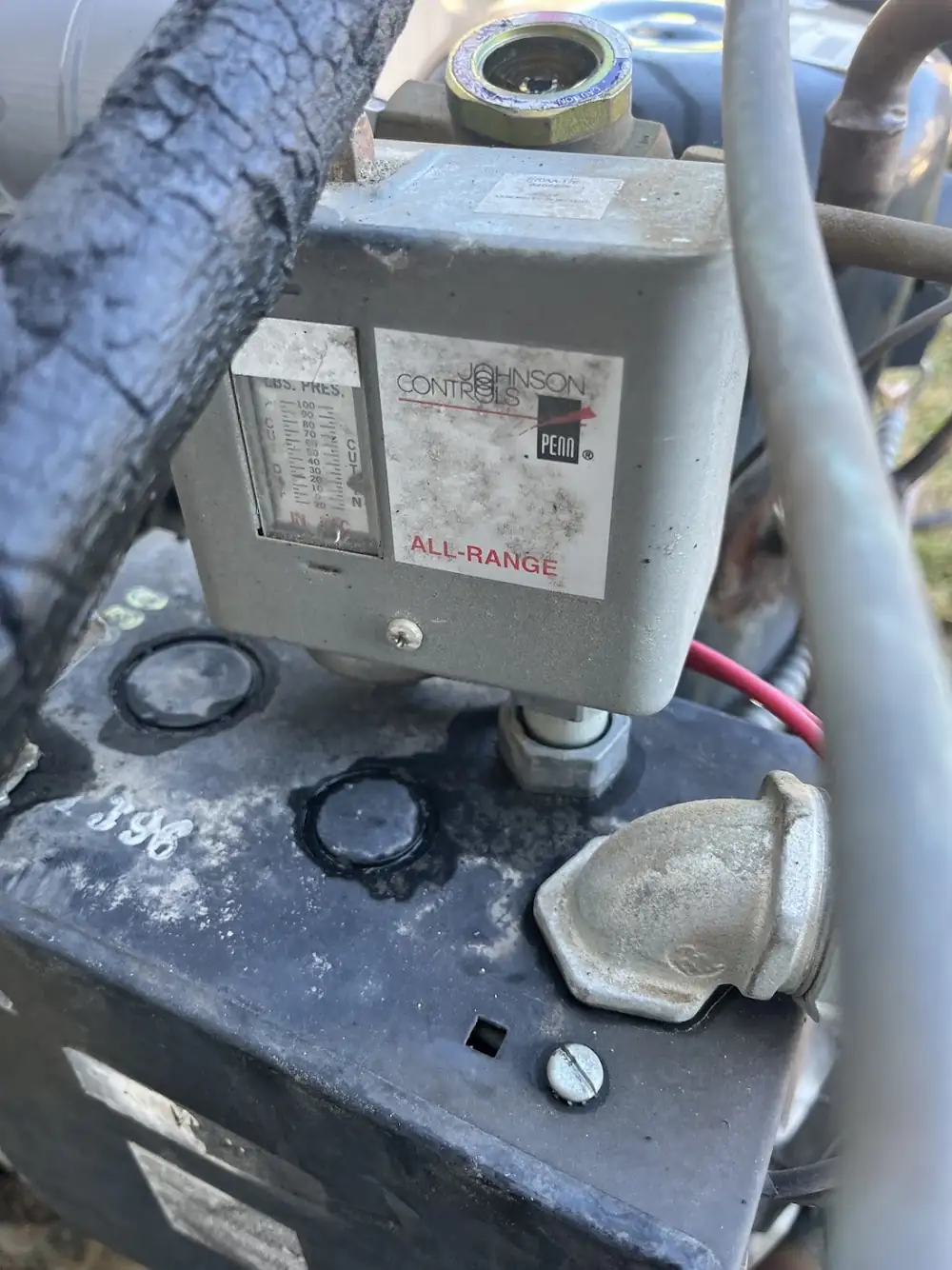
Replacing Restaurant Refrigeration: The New Refrigerant Limits by Equipment Type
Stand-alone units, remote condensing units and light commercial AC each have their own EPA refrigerant limit. Here is the table, what it means for a Johnston County restaurant, and what stays repairable.
Read more
Get In Touch
Ready to Get Started?
If this sounds like your situation, we can help.